Is AI the answer to combating tooth decay in children?
With hospital tooth extractions rising, and decay now the leading cause of hospital admissions among young children, dentists say the answer may lie in clearer communication, earlier intervention, and giving families the time they need to act before small problems become emergencies. Here, experts at Hello Pearl explain how AI can support dentists by automatically identifying and highlighting areas of concern on dental X-rays
If you are a parent, the thought of your child needing a tooth removed in hospital is deeply unsettling.
New figures released in February by the Royal College of Surgeons of England show that 33,976 children and young people aged 0-19 had teeth removed due to decay in 2025 – an 11% increase on the previous year – meaning that, on average, a child is losing a tooth to preventable decay every 15 minutes.
Among the youngest children, the situation is even more alarming: for those aged 5-9, tooth decay is now the single-biggest reason for hospital admissions in England, ahead of tonsillitis and broken bones.
And 70 children a day are undergoing extractions under general anaesthetic.
By offering real-time insights during a dental examination, this kind of technology can help dentists spot potential issues earlier and more consistently
Dentists are clear that most of these cases could have been avoided if problems were identified and addressed earlier.
The difficulty is not that parents do not care about their children’s teeth. It is that early decay is often silent. Small areas of enamel damage rarely cause pain and, by the time toothache appears, infection may already be advanced, and options become more invasive.
Could artificial intelligence (AI) make dental visits better and more time efficient?
With dental practices facing growing demands and time pressures, AI-assisted technology is emerging as a potential answer.
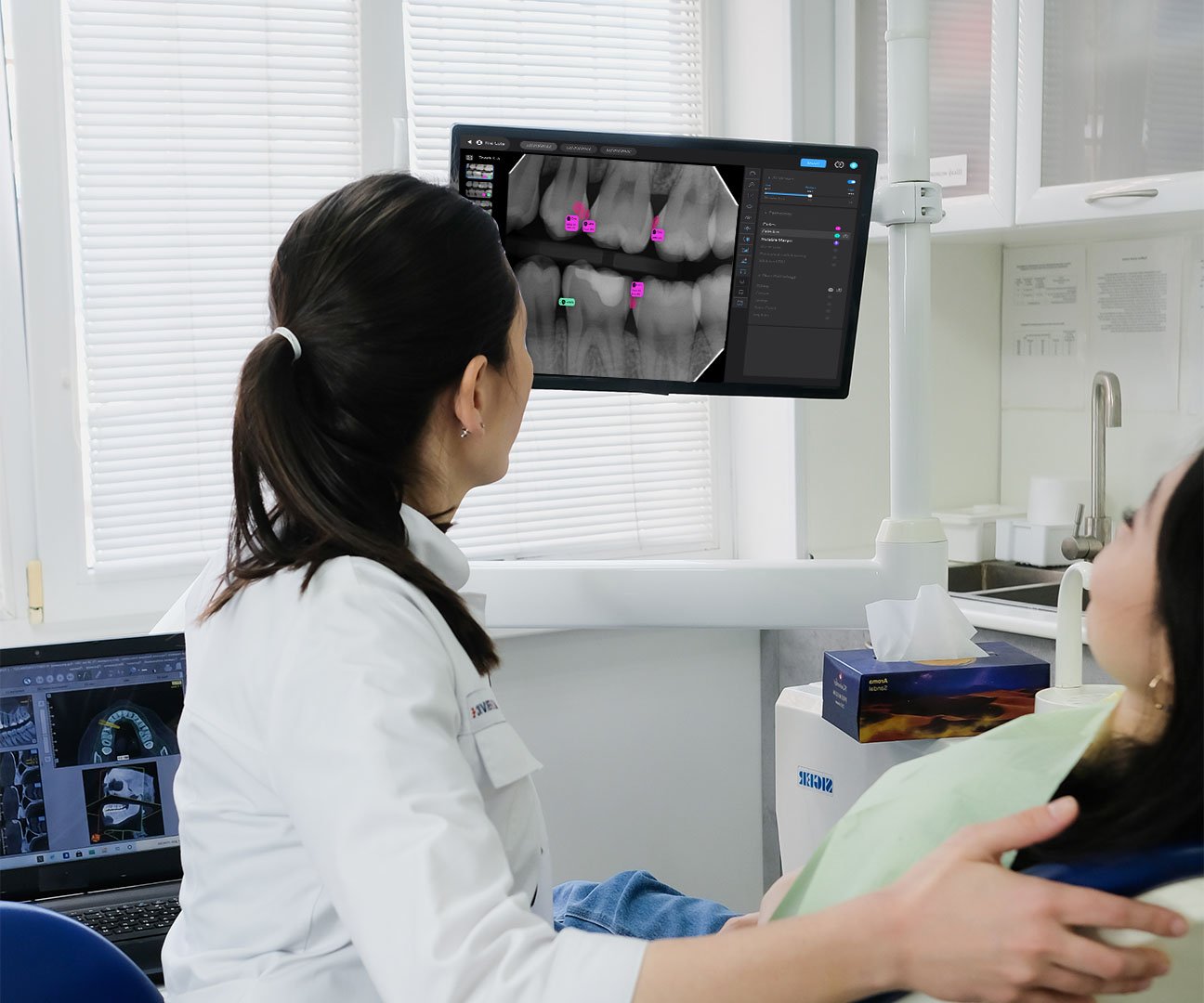
One example is Hello Pearl, whose FDA-cleared AI platform is designed to support dentists by automatically identifying and highlighting areas of concern on dental X-rays.
By offering real-time insights during a dental examination, this kind of technology can help dentists spot potential issues earlier and more consistently.
It may also make it easier for patients to see and understand what is happening, leading to clearer conversations about prevention and treatment options.
As dental practices look for ways to provide high-quality care while managing busy schedules, AI-supported X-ray analysis could help improve both accuracy and efficiencies freeing up more time for each consultation.
The 15-minute appointment challenge
Inside a typical NHS dental surgery, time is tight.
Standard appointments are strictly scheduled to 15 minutes and, within that brief window, a dentist must examine the mouth, assess X-rays, explain findings, record notes, and discuss treatment options.
When the patient is a young child who may be anxious, distracted, or frightened, those minutes can disappear quickly and many parents leave still feeling unsure about what they have just seen or understood.
As dental practices look for ways to provide high-quality care while managing busy schedules, AI-supported X-ray analysis could help improve both accuracy and efficiencies freeing up more time for each consultation
Dental X-rays are not easy to interpret if you are not trained to read them. To most of us, they look like blurred shapes rather than clear evidence of a problem.
But dentists may carefully explain where decay is starting, but it can be difficult for families to fully picture what is being described.
Making a clear difference
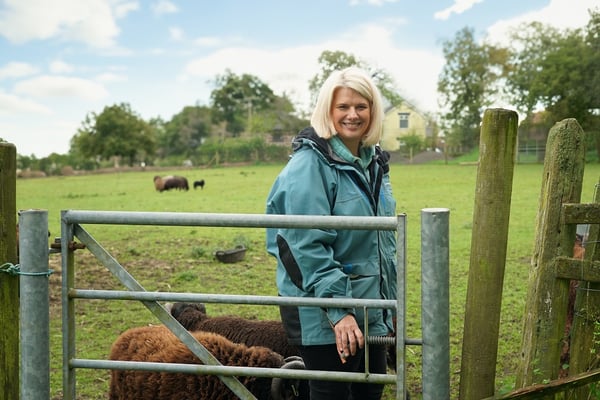
Dr Amanda Bassey-Duke, an associate dentist at Clyde Munro Dentistry in Perth, Scotland, says explaining X-rays used to feel like describing something only she could see.
The image would sit behind the patient while she translated technical details into reassurance and parents would listen carefully, but she knew some left feeling unsure.
Her practice introduced AI-supported imaging software from Hello Pearl and now, instead of abstract shapes, parents can see clearly marked areas which indicate early decay, gum disease, or bone changes.
Dr Bassey-Duke reports that the system saves her an average of nine minutes and 22 seconds per appointment.
In the context of a 15-minute NHS slot, that additional time is significant and allows her to review lifestyle habits, brushing, and diet, discuss fluoride use, suggest preventive treatments, and ensure that parents feel fully informed before making decisions about their child’s care.
Why parents deserve to see what dentists see
Confusion around dental X-rays is not unusual.
A national patient survey commissioned by Hello Pearl found that 65% of patients do not completely understand what their dentist is pointing out on an X-ray, and 59% say they do not fully trust diagnoses based on X-rays alone.
When people are uncertain, they are more likely to delay treatment or leave feeling uneasy. And, in children, delays can allow decay to progress to the point where extraction becomes necessary.
The same survey found that 71% of respondents said they would be more likely to trust their dentist’s diagnosis if AI software assisted in evaluating their X-rays.
The earlier decay is identified, the more likely it can be managed with simple, minimally-invasive measures (such as fluoride varnishes and more advanced enamel repair treatments) rather than fillings or extractions
In Dr Bassey-Duke’s in-clinic analysis, 86% said the AI visuals helped them understand their oral health better, 77% reported increased trust in their diagnosis, and 94% said they were satisfied with their appointment.
For families, that transparency can make a meaningful difference.
When parents can clearly see what is happening inside their child’s mouth, early treatment feels less alarming and more pro-active.
Small cavities can often be managed before they require drilling, let alone removal under general anaesthetic.
A turning point in children’s dentistry?
Paediatric dentistry presents unique challenges.
Young children may struggle to explain discomfort clearly and they may not sit still for long and many feel anxious before they even enter the surgery.
Parents who are dental phobic often pass on their anxiety to children and there are also greater challenges if the child is neuro divergent.
The aim is not to replace professional judgement, but to make what is happening inside a child’s mouth easier to visualise and explain
The way those early experiences unfold can shape how a child feels about dentistry for life.
Dentists say that early, accurate diagnosis is essential not only to prevent pain, but to create positive experiences, which build lifelong oral health habits.
The earlier decay is identified, the more likely it can be managed with simple, minimally-invasive measures (such as fluoride varnishes and more advanced enamel repair treatments) rather than fillings or extractions.
Stemming the tide: Second Opinion For Kids
Against the backdrop of rising hospital admissions, clinicians believe children’s dentistry has reached reaching an important tipping point.
It is timely therefore that Hello Pearl has recently introduced Second Opinion for Kids, building on its existing radiographic AI platform with a more-child-friendly interface which identifies cavities as ’sugar bugs’ and is expressly designed to support conversations between dentists, parents, and young patients.
The system can assist dentists in identifying early signs of decay in children as young as four, when treatment is typically simpler and less invasive.
The aim is not to replace professional judgement, but to make what is happening inside a child’s mouth easier to visualise and explain.
By clearly highlighting areas of concern on X-rays, dentists can involve both parents and children in the discussion. And, for a child, seeing a clear and engaging image can feel less confusing than listening to technical explanations while, for parents, it offers reassurance that recommendations are grounded in visible evidence.
Those working in paediatric care say that communication is often as important as treatment itself.
When children understand, even in simple terms, what is happening, anxiety can lessen.
While the latest figures show how far there is still to go, dentists argue that clearer communication and earlier intervention within routine appointments could form part of the answer
And, when parents feel informed, they are more likely to agree to early preventive care rather than waiting until symptoms worsen.
The Royal College of Surgeons has stated that no child should be hospitalised for a disease that is almost entirely preventable.
While the latest figures show how far there is still to go, dentists argue that clearer communication and earlier intervention within routine appointments could form part of the answer.
For parents, the message is not one of blame, but of awareness. Regular check-ups matter.
New preventive treatments make a difference and new software can help dentists explain what they see more clearly.
The hope is that as a result fewer families will face the distress of a hospital extraction for a condition that might have been stopped much earlier.
-Mar-03-2026-10-26-19-4166-AM.jpg?width=600&name=Untitled%20design%20(6)-Mar-03-2026-10-26-19-4166-AM.jpg)