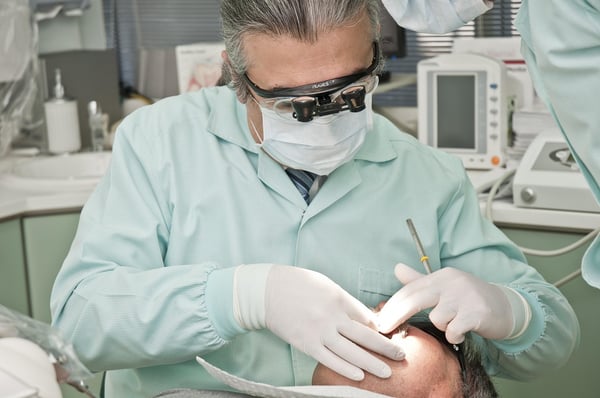
Dentists play a critical role in mouth cancer diagnosis

Mouth cancer diagnoses in England have reached their highest level on record, with experts warning that too many people remain unaware of the early signs of the disease.
New data from NHS England reveals that 9,293 people were diagnosed with mouth cancer in England last year, an increase of 37% in the past decade and more than double the number recorded a generation ago.
Deaths have also risen, with 2,970 people losing their lives in the same period – a 42% increase.
The figures have been highlighted by the Oral Health Foundation, which says the latest rise is ‘deeply concerning’ and comes amid persistently-low public awareness of mouth cancer.
Research by the charity shows that nearly one-in-four people (23%) do not know it is possible to develop cancer in and around the mouth, while awareness of the most-common signs and symptoms is as low as one in five (20%).
The charity leads Mouth Cancer Action Month, which runs throughout November and this year carries the theme ‘The Costs of Mouth Cancer’.
The campaign aims to highlight how the disease affects, not only physical health, but also confidence, speech, appearance, and finances, alongside the emotional toll on families and carers.
Dr Nigel Carter OBE, chief executive of the Oral Health Foundation, said the new statistics show that mouth cancer is exacting a growing cost on both people and the health system.
He adds: “The true cost of mouth cancer isn’t just measured in lives lost. It’s in the pain, disfigurement and emotional trauma survivors live with every day.
“The fact that cases continue to rise while awareness remains so poor is deeply worrying.
“Far too many people still don’t know the warning signs or delay getting help.
“We’re urging everyone to be mouthaware – check your mouth regularly and seek advice if something doesn’t feel right.”
Mahesh Kumar, president of the Mouth Cancer Foundation and a maxillofacial surgeon, added: “We’re increasingly seeing mouth cancer in people who don’t fit the traditional risk profile.
“While smoking and alcohol remain major risks, the human papillomavirus (HPV) is now linked to many new cases, particularly among younger people.
“Recognising the signs early – ulcers that don’t heal, red or white patches, or unusual lumps in the mouth, head, or neck – can make all the difference.”
Around a third of mouth cancers occur on the tongue, and nearly a quarter on the tonsils, with other cases found on the lips, gums, and floor of the mouth.
While most cancers are in decline, mouth cancer continues to rise sharply and the Oral Health Foundation says regular dental visits remain one of the simplest ways to catch the disease early.
“We want people to really know their mouth, head and neck,” adds Dr Carter.
“Understand what’s normal for you, so you can spot when something isn’t quite right. If you notice anything unusual – a lump, a patch, an ulcer that doesn’t heal – don’t delay.
“Visit your dentist or GP and get it checked. Acting quickly could save your life.”