-4.jpg?width=600&name=Untitled%20design%20(8)-4.jpg)
To help improve access to dental services, NHS Western Isles has opened a Dental Treatment Access...
Dental practices need 'rogue bees' to realise the potential of AI
Dental practice owners need to change the way they think about the impact of artificial intelligence (AI), according to Adrian Dray of CareStack.
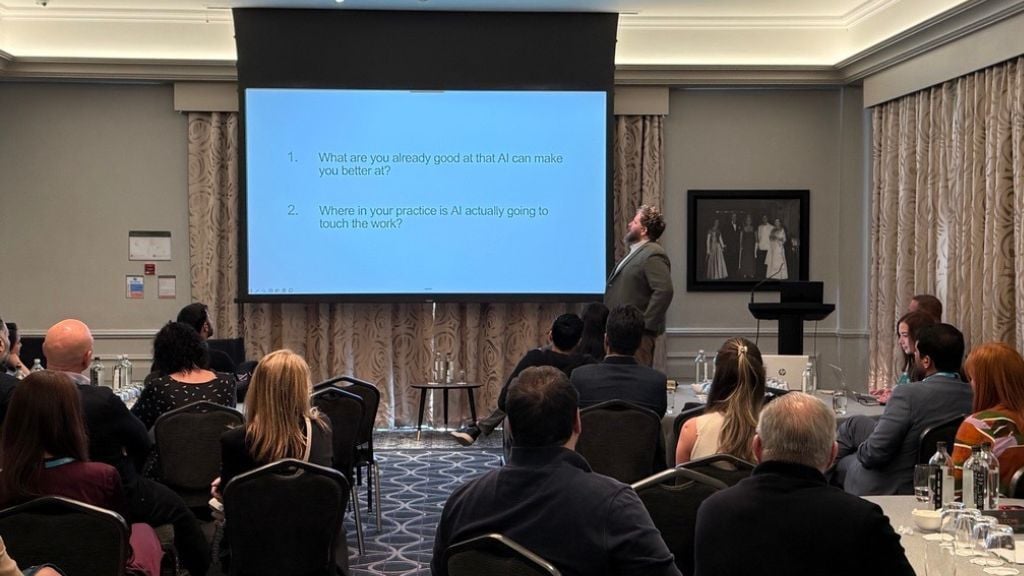
Speaking to delegates at the first Dentist Times Owners Club event of the year, held yesterday in St Albans, Dray compared the impact of AI on dentistry to bees in a beehive.
He told delegates: “You will have some 30,000 bees keeping a hive going. When each bee comes back to the hive, they do a little ‘waggle dance’. The direction and speed of the waggle tells the other members of the hive where nectar can be found and how far away. But not all bees will go in that direction. Around 20 per cent go rogue because it’s important some are always exploring.
“AI is great at doing repetitive tasks, usually quicker and sometimes better than we can, but you have also got to be prepared to explore. We all need rogue bees in our businesses.”
And he warned that practice owners were asking the wrong questions when considering the adoption of AI tools.
AI is not an isolated strategy, but a functional one. It does not replace, but is there to support
“It’s not about having the best AI,” he said. “Questions keep coming up about which vendor and how much will it cost? It’s not wrong to ask these questions, but they are in the wrong order.
“We need to ask other questions first. What is your practice already good at that AI can make you even better at? The real question is where is it essentially going to touch the work?
“AI is not an isolated strategy, but a functional one. It does not replace, but is there to support.”
He advised owners to view AI as ‘augmenting’ rather than ‘substituting’.
“The problem we are seeing is there is a lot of focus on ‘what can I replace’ and ‘who can I replace’. The focus hasn’t been on augmentation.
“Yes, some people are going to lose their jobs, but we need to focus on the right thing. We need to look at what history has shown us with technological revolution. When there was computerisation in the late 1980s and early 1990s those companies which augmented experienced a five-fold improvement in productivity.
We have to come to the realisation that AI tools are the easy part. We need to change the way we think about AI and that comes down to training and asking the right questions
“In dentistry we need to think ‘how to win’. Some practices have really loyal patients, but let’s use AI to make sure nothing is dropping through the gaps. After all, trust grows at the speed a coconut tree does, but falls at the speed of a coconut. If you don’t improve patient communication you might be missing a trick, and AI can help.
“Your practice might be known for something in particular and AI can help you sing about it. Or, if you have good operational data across sites, AI can lift that and show insights you can apply at speed.”
Ending his talk he advised owners to teach AI literacy to all staff as well as an understanding of behavioural science, adding: “We have to come to the realisation that AI tools are the easy part. We need to change the way we think about AI and that comes down to training and asking the right questions.”
The next Dentist Times Owners Club event will be held at The Belfry in Sutton Coldfield on 17 September.
For more information, click here.